


Using Salt to Preserve Food
For millennia, people have relied on salt (sodium chloride) to keep food fresh. It was the
first natural ‘chemical’ preservative introduced to food, and it has been widely used ever since to
preserve fish, meat, and vegetables. The Romans revered salt’s ability to preserve food so much
that they used it as currency. For centuries, salt was the primary preservation method until
modern refrigeration, freezing, and canning techniques took its place. In addition, the food
supply makes use of a variety of other sodium-containing chemicals that have a preservation
effect. While salt is still a valuable preservation tool when used in conjunction with other
techniques, it also serves as the principal means of food preservation in places without access to
modern refrigeration or other preservation methods.
Why is salt used to preserve food
Salt is an excellent preservative because it removes moisture from food. When we add
salt to our food, we end up with an imbalance in the amount of salt in our bodies. In order to
keep the cell salinity of the food in equilibrium with the surrounding environment, osmosis is
used. Salt concentrations on both sides of the membrane are equalized by the movement of water
across a cell membrane. Water is sucked out of the food as salt is added. Food spoilage
organisms find it increasingly difficult to thrive as the moisture is drained from them.
Bacterial cells can also be ruptured by high salt concentrations because of pressure differences
between the microorganism’s exterior and interior. Because it reduces the amount of water
available to mold and yeast, salt is an excellent antimicrobial agent for food. A high quantity of
salt is lethal to the microorganisms that contribute to the rotting of food and the spread of
disease. Bacteria can be eliminated with a concentration of salt that is 20 percent. Microbial
growth is inhibited at lower concentrations until you get down to the salinity of the cells, which
may have the opposite and unintended effect of providing optimum growing conditions for the
microbes.
The presence of a high salt concentration can also be hazardous to the internal activities of
bacteria, damaging both their DNA and their enzymes. Sugar is added to foods like jams and
jellies in order to act as a preservative since sugar-rich solutions have the same effects on
bacteria as sugar itself, which is why jams and jellies are preserved with sugar.
How is salt used to preserve food
Granulated salt and brine, a salt-and-water solution, are the two most common forms of
salt used to preserve food. Pickles and smoked salmon are just a few of the foods that are
preserved with salt. It is common practice to preserve vegetables by pickling them in a brine,
which is a solution made of equal parts salt and water. Meat, on the other hand, can be dry-cured
with salt or injected with a salt solution.
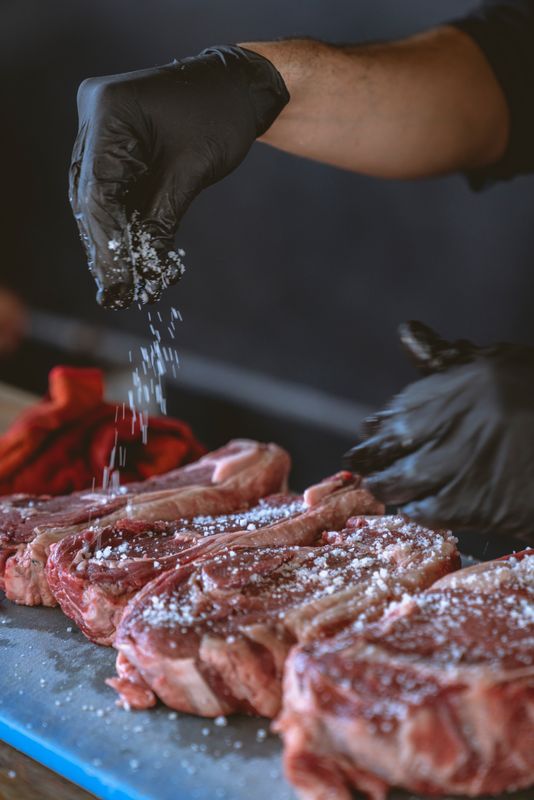
Dry curing, also known as salt granule curing, entails applying salt to the exterior of a
piece of meat and storing it for several weeks. It’s one of the oldest and most traditional
approaches to preserving foods. In the modern process of curing, the meat may be injected with
salt brine. To preserve food, the right amount of salt (around 20% salinity) must be used to draw
moisture from cells, including not only the food but also bacteria present. Because of this,
bacteria are unable to flourish in an environment that is high in salt and contains only a small
amount of moisture. As a result, it is much more challenging for bacteria to grow and spread.
Fermentation with the Use of Salt
Fermentation is used to preserve some foods. With the aid of salt, this process can be
controlled and improved. Dehydrating the growing substrate with salt ensures that the yeast or
mold has a moist environment to thrive. This preservation technique does not make use of
anti-caking chemicals.